

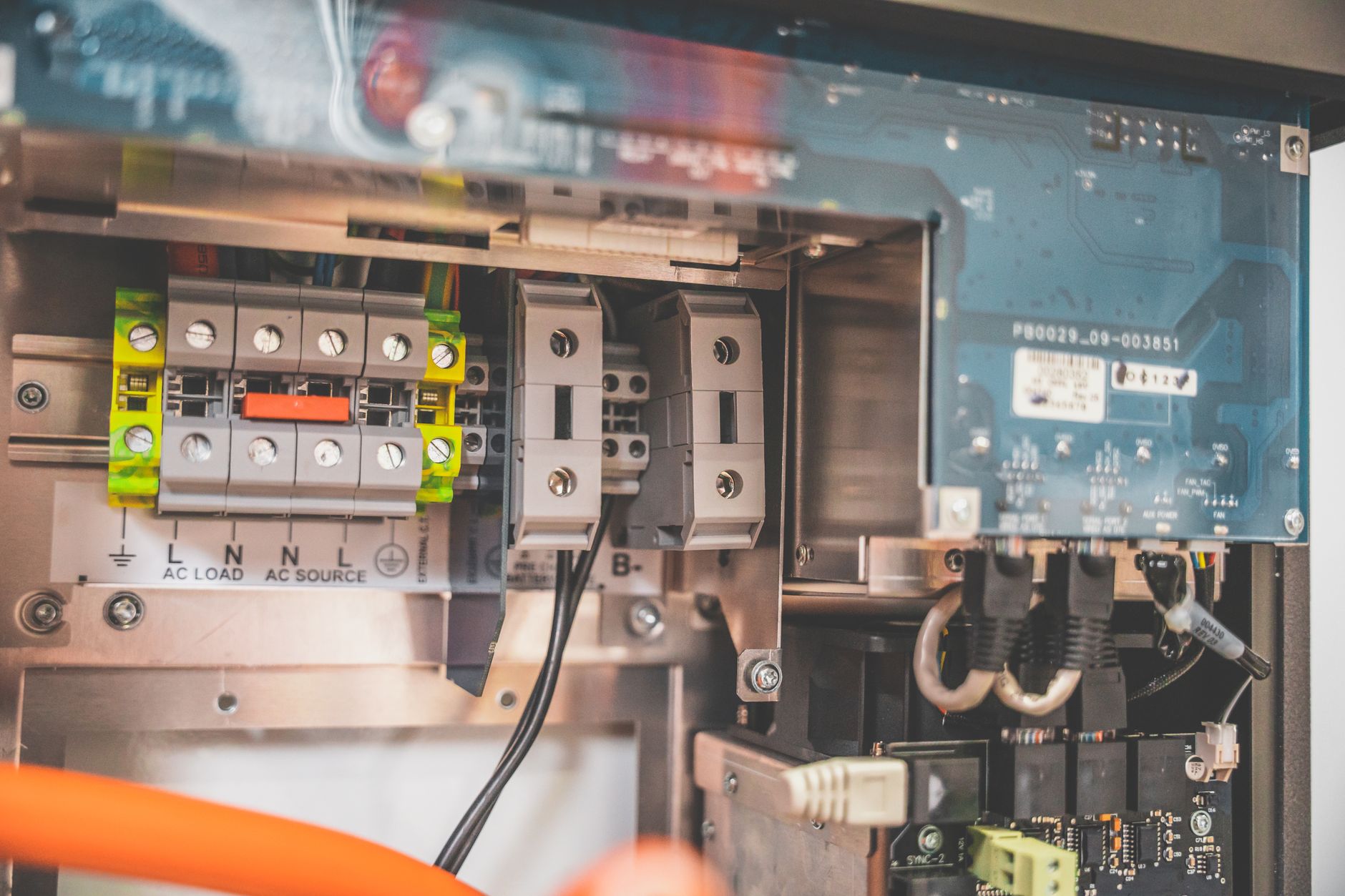
A solar power system requires careful planning to operate safely. Cables and fuses protect your equipment from damage and fire. Choosing the right components depends on the current, voltage, and distance of your setup. This guide explains how to select the correct parts for your installation.
Understanding Cable Sizing and Voltage Drop
Cables carry electricity from your panels to your charge controller and battery bank. If a cable is too thin, it creates resistance. This resistance causes a voltage drop, which reduces the power reaching your batteries. It also generates heat, which can melt insulation and cause short circuits.
You must choose a wire gauge based on the maximum current, measured in amps, that will flow through the circuit. The American Wire Gauge (AWG) system defines wire thickness. A lower AWG number indicates a thicker wire. For example, a 4 AWG wire is thicker than a 10 AWG wire.
Calculate the total length of the wire run from the source to the destination. Longer runs require thicker cables to compensate for voltage drop. Most solar manufacturers provide charts that correlate amperage and distance to the recommended wire gauge. Always aim for a voltage drop of less than three percent for optimal efficiency.
Use only stranded copper wire for solar installations. Stranded wire handles vibration better than solid wire. Ensure the insulation is rated for outdoor use if the cables will be exposed to sunlight. UV-resistant insulation prevents the plastic from cracking over time.
Selecting the Right Fuses and Breakers
Fuses and circuit breakers act as safety valves for your electrical system. They break the circuit if the current exceeds a safe level. This prevents wires from overheating during a fault or short circuit. You must install a fuse between every major component in your system.
Place a fuse between the solar panels and the charge controller. Place another fuse between the charge controller and the battery bank. Finally, place a fuse between the battery bank and the inverter. The fuse must be located as close to the battery terminal as possible.
The fuse rating should be slightly higher than the maximum current expected in the circuit. However, the fuse must have a lower rating than the maximum current capacity of the wire. This ensures the fuse blows before the wire insulation melts. For example, if your wire is rated for 50 amps, use a 40-amp fuse.
Choose between ANL fuses, Class T fuses, or circuit breakers. ANL fuses are common for mid-range systems. Class T fuses are ideal for high-current battery banks because they have a high interrupt capacity. Circuit breakers offer the convenience of resetting the system without replacing a fuse. Ensure your chosen device is rated for the voltage of your battery bank.
Best Practices for Installation
Proper installation techniques prevent common electrical failures. Use high-quality crimp connectors for all wire terminations. Loose connections create high resistance and generate heat. Use a proper crimping tool to ensure a tight mechanical bond between the wire and the lug.
Label every cable clearly at both ends. This helps with troubleshooting and future maintenance. Use heat-shrink tubing over crimped connections to protect them from moisture and corrosion. Keep your wiring organized using cable ties or wire looms to prevent sagging and accidental damage.
Avoid running cables near sharp metal edges. Use rubber grommets or conduit to protect wires passing through walls or enclosures. If you must run wires outside, use UV-rated conduit to shield them from the elements. Keep positive and negative cables separated where possible to reduce the risk of short circuits.
Check your connections periodically. Thermal expansion and contraction can loosen terminals over time. Inspect your fuses and breakers for signs of discoloration or melting. If you find a blown fuse, investigate the cause before replacing it. A blown fuse often indicates a deeper issue, such as a short circuit or an overloaded appliance.
Consult the manuals for your specific solar panels, charge controller, and inverter. Manufacturers often specify the exact fuse size and wire gauge required for their products. Following these specifications ensures your system remains within its warranty and operates safely. When in doubt, consult a licensed electrician to review your plans before finalizing the installation.
Related reading
 How to Choose Between Grid‑Tied and Hybrid Solar Systems
 How to Correctly Size an Inverter for Borehole Pumps
AI disclosure: this article was automatically drafted with AI assistance and reviewed before publishing. Written with AI assistance: gemini-3.1-flash-lite. It is general information, not professional medical, financial or legal advice.


0 comments:
Post a Comment